Mudassir Sheikha: The Man Who Built Careem Into a Billion-Dollar Business
From growing up in Karachi to building Careem in Dubai, the Pakistani entrepreneur's story covers early technology jobs, bold business decisions, a $3.1 billion Uber deal, and his work with startup founders.

Introduction
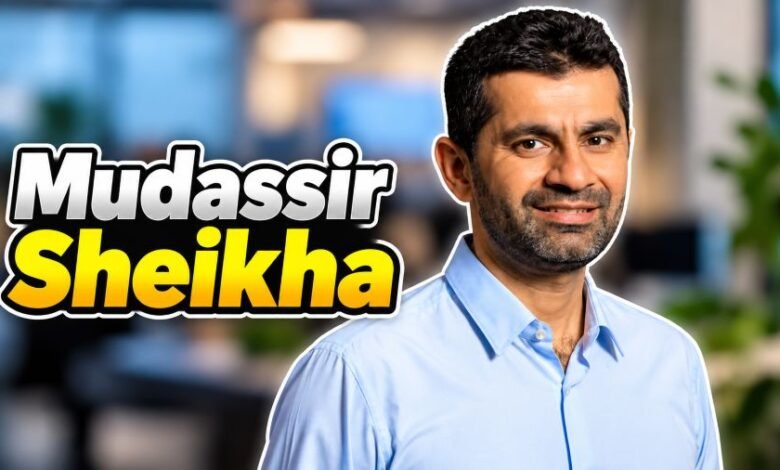
Mudassir Sheikha is a Pakistani entrepreneur and the co-founder and CEO of Careem. He helped start the company in Dubai in 2012. What began as a car-booking service eventually became one of the Middle East’s best-known technology businesses.
The biggest moment came in 2019. Uber agreed to acquire Careem for $3.1 billion. The transaction closed in January 2020, but Sheikha stayed to lead the company.
His career began long before Careem. He worked in Silicon Valley, gained experience in Pakistan, and later joined McKinsey in Dubai. Those early jobs helped prepare him to run a large business.
Quick Facts
| Detail | Information |
|---|---|
| Full Name | Mudassir Sheikha |
| Nationality | Pakistani |
| Hometown | Karachi, Pakistan |
| Profession | Entrepreneur and business executive |
| Known For | Co-founder of Careem |
| Current Position | Co-founder and CEO of Careem |
| Undergraduate Education | University of Southern California |
| Master’s Degree | Stanford University |
| Fields of Study | Economics and Computer Science |
| Previous Companies | Trilogy Software, Brience, DeviceAnywhere, McKinsey & Company |
| Careem Founded | July 2012 |
| Co-founders | Magnus Olsson and Abdullah Elyas (joined in 2013) |
| Business Headquarters | Dubai, UAE |
| Major Business Deal | Careem’s $3.1 billion acquisition by Uber |
| Other Roles | Founding Board Chair of Endeavor Pakistan; D360 Bank board member |
Early Life and Education
Mudassir Sheikha grew up in Karachi, Pakistan. He later moved to the United States for higher education.
He attended the University of Southern California, where he studied economics and computer science.
Those subjects gave him two different strengths. Computer science helped him understand software. Economics introduced him to business decisions and markets.
He continued studying at Stanford University, earning a master’s degree in computer science.
This background proved useful later. Building an app is one challenge. Running a company across several countries is another.
His university education prepared him for both the technical and commercial sides of business.
Early Career in the Technology Industry
His professional story started in software.
Before creating Careem, Mudassir Sheikha worked with technology companies in the United States. His early career included Trilogy Software and Brience, a mobile technology startup in San Francisco.
He joined Brience in March 2000.
Working with young technology businesses gave him direct experience with product development and the pressure of building a company.
He later worked at DeviceAnywhere, where he managed an offshore development operation in Pakistan.
DeviceAnywhere provided technology used to test mobile devices and applications. Keynote Systems acquired the business in October 2011.
That experience mattered.
Sheikha saw how technology teams worked across different countries. He also learned about managing people and serving business customers.
Moving Into Management Consulting
His next major career move took him to Dubai.
He joined McKinsey & Company, the international management consulting firm.
The work introduced him to business planning, company operations, and problems faced by major organisations.
He also met Magnus Olsson, a fellow McKinsey consultant.
Both men were interested in starting a company. They wanted to solve a problem that affected everyday life in the region.
They eventually chose transportation.
How Careem Started
In July 2012, Mudassir Sheikha and Magnus Olsson founded Careem in Dubai.
The idea was simple.
People needed dependable transport. Booking a car was not always convenient, particularly for corporate customers.
Careem started as a web-based corporate car-booking service. Customers could arrange transportation without depending entirely on traditional booking methods.
At first, the business was small.
The founders had to recruit drivers, find customers, and build trust in their service.
They also needed technology that worked properly.
A failed booking could mean a lost customer. Poor service could damage the company’s reputation.
So the team focused on making the experience easier.
In 2013, Abdullah Elyas joined as Careem’s third co-founder. The company also began expanding into other markets.
The business soon moved beyond corporate bookings.
Customers could use mobile applications to request rides, while drivers, known within Careem as Captains, could receive bookings and earn income.
Growing Across the Middle East
Careem entered a competitive market. International transport apps were already attracting attention.
But the founders understood something useful.
Customers in different countries had different needs.
Payment habits varied. Transport problems changed from city to city. Trust was especially important in markets where app-based rides were still unfamiliar.
Mudassir Sheikha and his team worked to adapt Careem’s services to local conditions.
The company expanded into countries including Saudi Arabia, Egypt, Jordan, and Pakistan.
It launched ride-hailing services in Pakistan in 2015.
The business also introduced new employment opportunities for drivers who wanted to earn through the platform.
Careem became a familiar name across many Middle Eastern cities.
By 2016, the company had reached unicorn status, meaning its valuation had passed $1 billion.
That was a major moment for a startup founded only four years earlier.
The $3.1 Billion Uber Acquisition
The largest financial milestone arrived in March 2019.
Uber announced plans to acquire Careem for $3.1 billion.
The acquisition closed on January 2, 2020, after the necessary approvals in major markets.
Careem kept its brand.
Mudassir Sheikha also remained in charge of the business.
The deal attracted international attention because it showed that a technology company built in the Middle East could achieve a multibillion-dollar exit.
The transaction also gave Uber a stronger position in regional ride-hailing markets.
For Careem, the deal opened another chapter.
The company could continue developing its services with the support of a much larger international business.
One point needs to be clear: the $3.1 billion was the announced acquisition price for Careem, not Sheikha’s personal earnings.
His individual proceeds were not publicly established by that figure.
Building the Careem Super App
After the Uber acquisition, Careem continued working on services beyond ride-hailing.
The company wanted customers to handle more everyday tasks from one application.
Food delivery became part of that plan. Grocery orders and payment services followed.
Careem’s Super App business has offered services such as:
- Food and grocery delivery
- Careem Pay financial services
- Bike rentals in supported markets
- Courier and delivery services
- Other consumer services within the application
The company wanted to save customers time.
Instead of opening several applications for routine tasks, users could access different services within Careem.
In an interview published in March 2025, Mudassir Sheikha discussed a future in which the app could become a personalised digital assistant for everyday needs.
He also spoke about improving customer service and using artificial intelligence to make services more useful.
The $400 Million Investment From e&
Another major business announcement came in April 2023.
Careem secured a $400 million investment agreement with UAE technology group e& for its Super App business.
The transaction closed in December 2023.
Under the agreement, e& acquired a 50.03% stake in Careem Technologies, the company operating the non-ride-hailing Super App business.
Uber retained a minority interest in Careem Technologies and continued to own the ride-hailing business.
The deal created a different ownership structure for Careem’s services.
It also provided investment capital for developing the Super App.
For Sheikha, the agreement supported his plan to build a larger consumer technology business while keeping the Careem name.
Challenges and Tough Decisions
Business growth brought problems, too.
Careem faced a serious setback during the COVID-19 pandemic.
Transport demand dropped sharply in 2020. The company announced hundreds of job cuts as it responded to the decline.
The decision affected employees across the organisation.
It was a difficult period.
The company had to adjust its operations while continuing to serve customers in a changing market.
Why Ride-Hailing Stopped in Pakistan
Another difficult announcement came in June 2025.
Mudassir Sheikha confirmed that Careem would suspend its ride-hailing service in Pakistan from July 18, 2025.
The service had operated in the country since 2015.
He explained that tough economic conditions, stronger competition, and limits on investment made continued operations difficult.
The announcement concerned ride-hailing.
Careem’s technology work in Pakistan was a separate part of the business, and Sheikha said the company’s connection with Pakistan would continue through that work.
The decision showed the financial pressure facing transport platforms, even those with established brands.
Other Business and Leadership Roles
His work extends beyond Careem.
Mudassir Sheikha has taken part in organisations that support entrepreneurs and technology businesses.
Endeavor Pakistan
He is the Founding Board Chair of Endeavor Pakistan.
Endeavor is an international organisation that supports entrepreneurs building high-growth companies.
Its Pakistan operation was announced in 2022.
Through this role, Sheikha helps support founders who want to build larger businesses and connect with experienced business leaders.
His involvement also reflects his long-standing connection with Pakistan’s technology industry.
D360 Bank
Sheikha serves on the board of D360 Bank, a digital banking institution in Saudi Arabia.
The bank focuses on providing financial services through digital channels.
His board membership reflects his experience with technology companies serving large consumer markets.
Business Leadership and Working Style
Mudassir Sheikha often talks about building companies around real customer problems.
His approach can be seen in Careem’s early decisions.
The company did not begin by offering every possible service.
It started with transport.
Then the team tested new ideas, expanded into other cities, and learned from customers.
Local knowledge played an important part.
Careem adjusted its services to match payment habits, customer expectations, and operating conditions in different countries.
Sheikha has also discussed the importance of company culture.
He believes that capable teams and a clear purpose help businesses stay focused during difficult periods.
His leadership experience shows how company priorities can change.
At first, Careem needed to win customers and build trust.
Later, it had to manage regional expansion, an international acquisition, and the development of new services.
Each stage brought different decisions.
Achievements and Recognition
Several milestones stand out in his professional career.
| Year | Achievement |
|---|---|
| 2012 | Co-founded Careem in Dubai |
| 2013 | Expanded the business with a third co-founder |
| 2015 | Careem entered Pakistan’s ride-hailing market |
| 2016 | Careem reached unicorn status |
| 2018 | Featured in the Bloomberg 50 |
| 2019 | Uber announced the $3.1 billion acquisition |
| 2020 | Uber completed the acquisition |
| 2022 | Helped establish Endeavor Pakistan |
| 2023 | Careem Technologies received a $400 million investment from e& |
| 2024 | Featured in Entrepreneur Middle East’s The 100 |
| 2026 | Continues to be identified as Careem’s co-founder and CEO |
His achievements are closely connected with Careem’s growth.
The company became one of the best-known examples of a technology startup founded in Dubai and expanded across the wider region.
Current Position and Future Business Direction
As of October 2026, Careem’s official leadership information continues to identify Mudassir Sheikha as its co-founder and CEO.
His business focus includes the company’s Super App services and their growth in key markets.
Careem has moved far beyond its original corporate car-booking product.
Its business now covers several consumer services, although availability differs by country.
Sheikha’s public interviews suggest a continuing focus on customer experience, useful services, and improving the technology behind the app.
He also remains involved with Endeavor Pakistan and D360 Bank.
These roles connect him with entrepreneurs and financial technology businesses outside Careem.
Final Thought
Mudassir Sheikha built his career through technology, consulting, and entrepreneurship.
He started with software jobs. Later, he helped create Careem in Dubai.
The company grew into a major regional transport platform before Uber acquired it in a $3.1 billion deal.
But the business story continued.
New investment, digital services, and difficult market decisions have all formed part of Careem’s development.
His career offers a useful example of how a small startup can grow into a major company while still facing hard decisions along the way.
Frequently Asked Questions (FAQs)
1. Who is Mudassir Sheikha?
Mudassir Sheikha is a Pakistani entrepreneur and the co-founder and CEO of Careem, a technology business founded in Dubai in 2012.
2. Where is he from?
He grew up in Karachi, Pakistan, and later studied in the United States.
3. What is his educational background?
He studied economics and computer science at the University of Southern California. He later earned a master’s degree in computer science from Stanford University.
4. Who founded Careem?
Mudassir Sheikha and Magnus Olsson founded Careem in 2012. Abdullah Elyas joined as the third co-founder in 2013.
5. How much did Uber pay for Careem?
Uber acquired Careem in a deal announced at $3.1 billion. The acquisition closed on January 2, 2020.
6. Is he still the CEO of Careem?
Yes. Careem’s official leadership page continues to identify him as co-founder and CEO as of October 2026.
7. What other organisations is he involved with?
He is the Founding Board Chair of Endeavor Pakistan and a board member of D360 Bank in Saudi Arabia.
8. Why did Careem suspend ride-hailing in Pakistan?
Careem announced the suspension from July 18, 2025, citing economic challenges, growing competition, and investment constraints.